Dissemination Days
Dissemination and Outreach Days
Seminars connect the summer-school themes with current research topics
Throughout the Trimester (2 May – 31 July 2026) Department of Mathematics and Applications "R. Caccioppoli"
Speakers
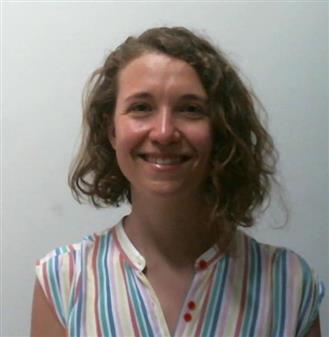
Nadia Loy
Politecnico di Torino - DISMA
A Statistical Mechanics Approach to Describe Cell Re-orientation under Stretch
Event PosterConference Slides
Maria Grazia Naso
Università degli Studi di Brescia
The Art of Losing Energy - Optimal Dissipation in Continuum Mechanics
Event PosterConference Slides
Lorenzo Marrucci
Università degli Studi di Napoli Federico II
Molding geometrical structures of light with liquid crystals
Event PosterConference Slides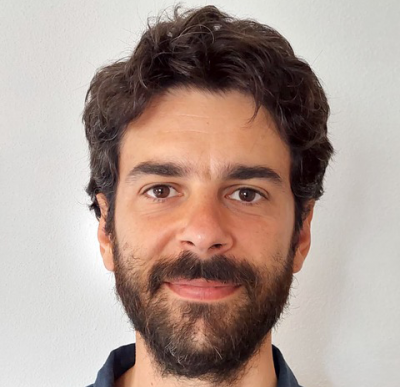
Filippo Cardano
Università degli Studi di Napoli Federico II
Topological eigenpolarization structures in light propagation through patterned liquid-crystal cells
Event PosterConference Slides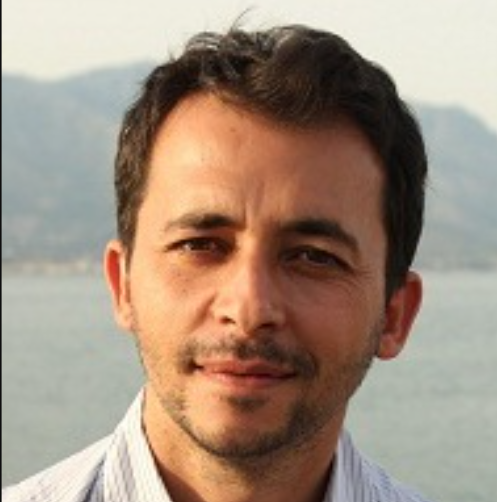
Luigi Frunzo
Università degli Studi di Napoli Federico II
Hyperbolic Free Boundary Problems in Mathematical Biology: The Biofilm Case
Event PosterConference Slides (soon)
Gaetano Fiore
Università degli Studi di Napoli Federico II
Some recent progress in solving an inverse problem: maximizing plasma-based acceleration of electrons
Event PosterConference SlidesScheduled Seminars
Lecturer
Date & Time
Location
Nadia Loy
May 21 (10:00-11:00)
Aula Rionero
Department of Mathematics and Applications "R. Caccioppoli", University of Naples "Federico II"
Department of Mathematics and Applications "R. Caccioppoli", University of Naples "Federico II"
Maria Grazia Naso
June 23 (10:00-11:00)
Sala del Consiglio
Department of Mathematics and Applications "R. Caccioppoli", University of Naples "Federico II"
Department of Mathematics and Applications "R. Caccioppoli", University of Naples "Federico II"
Lorenzo Marrucci
July 15 (15:00-16:00)
Aula Rionero
Department of Mathematics and Applications "R. Caccioppoli", University of Naples "Federico II"
Department of Mathematics and Applications "R. Caccioppoli", University of Naples "Federico II"
Filippo Cardano
July 15 (16:00-17:00)
Aula Rionero
Department of Mathematics and Applications "R. Caccioppoli", University of Naples "Federico II"
Department of Mathematics and Applications "R. Caccioppoli", University of Naples "Federico II"
Luigi Frunzo
July 20 (16:00-17:00)
Aula Rionero
Department of Mathematics and Applications "R. Caccioppoli", University of Naples "Federico II"
Department of Mathematics and Applications "R. Caccioppoli", University of Naples "Federico II"
Gaetano Fiore
July 22 (11:00-12:00)
Aula Rionero
Department of Mathematics and Applications "R. Caccioppoli", University of Naples "Federico II"
Department of Mathematics and Applications "R. Caccioppoli", University of Naples "Federico II"
Abstract
Nadia Loy
Politecnico di Torino - DISMA
A Statistical Mechanics Approach to Describe Cell Re-orientation under Stretch
Experiments show that when a monolayer of cells cultured on an elastic substratum is subject to a cyclic stretch, cells tend to reorient either perpendicularly or at an oblique angle with respect to the main stretching direction. Due to stochastic effects, however, the distribution of angles achieved by the cells is broader and, experimentally, histograms over the interval [0◦, 90◦] are usually reported. Here we will determine the evolution and the stationary state of probability density functions describing the statistical distribution of the orientations of the cells using Fokker–Planck equations derived from microscopic rules for describing the reorientation process of the cell. As a first attempt, we shall use a stochastic differential equation related to a very general elastic energy that the cell tries to minimize, and we will show that the results of the time integration and of the stationary state of the related forward Fokker–Planck equation compare very well with experimental results obtained by different researchers. Then, in order to model more accurately the microscopic process of cell reorientation and to shed light on the mechanisms performed by cells that are subject to cyclic stretch, we consider discrete in time random processes that allow to recover Fokker–Planck equations through classical tools of kinetic theory. In particular, we shall introduce
a model of reorientation as a function of the rotation angle as a result of an optimal control problem. Also in this latter case the results match very well with experiments.
a model of reorientation as a function of the rotation angle as a result of an optimal control problem. Also in this latter case the results match very well with experiments.
Maria Grazia Naso
Università degli Studi di Brescia
The Art of Losing Energy - Optimal Dissipation in Continuum Mechanics
What is the fastest way to kill a vibration?
Not with brute force. Not with complicated electronics. But with Mathematics.
This seminar reveals the hidden physics of optimal energy dissipation: how a vibrating system naturally wants to lose energy, and how we can design materials and geometries to make it happen exponentially fast.
From car suspensions to aircraft wings, from skyscrapers to micro-electromechanical systems: the art of losing energy is everywhere.
And it's governed by a few elegant mathematical principles that any researcher can master.
No prior knowledge of control theory is required, only basic PDEs and Continuum Mechanics and the beauty of exponential decay .
Come for the Math. Stay for the Engineering. Leave with a new way of seeing the world.
Not with brute force. Not with complicated electronics. But with Mathematics.
This seminar reveals the hidden physics of optimal energy dissipation: how a vibrating system naturally wants to lose energy, and how we can design materials and geometries to make it happen exponentially fast.
From car suspensions to aircraft wings, from skyscrapers to micro-electromechanical systems: the art of losing energy is everywhere.
And it's governed by a few elegant mathematical principles that any researcher can master.
No prior knowledge of control theory is required, only basic PDEs and Continuum Mechanics and the beauty of exponential decay .
Come for the Math. Stay for the Engineering. Leave with a new way of seeing the world.
Lorenzo Marrucci
Università degli Studi di Napoli Federico II
Molding geometrical structures of light with liquid crystals
A beam of light is characterized by the following local properties: intensity, phase, and polarization. In most practical cases, these optical properties are either uniform or varying in space in a smooth, simple fashion. But it is nowadays possible to create strongly space-variant light beams, in which one or more of these properties vary in space in a prescribed way, forming nontrivial geometrical patterns. In other words, it is possible to endow light with a geometrical “structure”.
In this lecture, I will focus on optical patterns of phase and/or polarization. In contrast to intensity, which is defined as a nonnegative real number, phase and polarization can be represented as points in closed manifolds, e.g. a circle or a sphere. A pattern of these properties may then acquire a rich geometrical structure, including the possible appearance of topological singularities of different kinds, e.g. optical scalar vortices (singularities of phase) and vector-vortices (singularities of polarization), a multiple-helix shape of the optical wavefront, and other rather nontrivial three-dimensional structures of the light field.
While conceiving these structures in theory is often very simple, realizing them in the lab is usually not as simple. There are today different tools allowing the experimenter to control the spatial structure of light. In this lecture I will focus on a technology we developed in Naples that exploits special-patterned liquid crystal cells. Interestingly, even the working principle allowing this device to control the structure of light is somehow “geometrical” in its nature, being related to the so-called “geometric phase”, an ubiquitous concept crossing many boundaries of physics, ranging from optics to classical mechanics, to quantum mechanics.
In this lecture, I will focus on optical patterns of phase and/or polarization. In contrast to intensity, which is defined as a nonnegative real number, phase and polarization can be represented as points in closed manifolds, e.g. a circle or a sphere. A pattern of these properties may then acquire a rich geometrical structure, including the possible appearance of topological singularities of different kinds, e.g. optical scalar vortices (singularities of phase) and vector-vortices (singularities of polarization), a multiple-helix shape of the optical wavefront, and other rather nontrivial three-dimensional structures of the light field.
While conceiving these structures in theory is often very simple, realizing them in the lab is usually not as simple. There are today different tools allowing the experimenter to control the spatial structure of light. In this lecture I will focus on a technology we developed in Naples that exploits special-patterned liquid crystal cells. Interestingly, even the working principle allowing this device to control the structure of light is somehow “geometrical” in its nature, being related to the so-called “geometric phase”, an ubiquitous concept crossing many boundaries of physics, ranging from optics to classical mechanics, to quantum mechanics.
Filippo Cardano
Università degli Studi di Napoli Federico II
Topological eigenpolarization structures in light propagation through patterned liquid-crystal cells
A thin layer of nematic liquid crystal behaves as a uniaxial anisotropic material. Light passing through it has two special polarization states, its “eigenpolarizations”, that propagate in a particularly simple way. In a uniform cell, these states are fixed; in a patterned cell, they vary from point to point.
These spatially varying polarization states can be represented as vectors on the Poincaré sphere, giving rise to geometric fields that may contain nontrivial topological structures. In this lecture, I will show how liquid-crystal metasurfaces with periodically modulated optic-axis orientations can be designed so that their eigenpolarization fields form one- and two-dimensional topological textures, including skyrmions.
I will also explain why these structures are not only geometric objects: they have observable consequences for light propagation. Using an analogy with electron motion in periodic crystals, I will show how suitably prepared optical wave packets can produce far-field patterns that directly reveal an anomalous transverse displacement, analogous to that observed in the quantum Hall effect and recently measured in our experiments.
The goal of the lecture is to present patterned liquid-crystal cells as simple and experimentally accessible systems in which ideas from topology, geometry, and condensed-matter physics can be explored using light.
These spatially varying polarization states can be represented as vectors on the Poincaré sphere, giving rise to geometric fields that may contain nontrivial topological structures. In this lecture, I will show how liquid-crystal metasurfaces with periodically modulated optic-axis orientations can be designed so that their eigenpolarization fields form one- and two-dimensional topological textures, including skyrmions.
I will also explain why these structures are not only geometric objects: they have observable consequences for light propagation. Using an analogy with electron motion in periodic crystals, I will show how suitably prepared optical wave packets can produce far-field patterns that directly reveal an anomalous transverse displacement, analogous to that observed in the quantum Hall effect and recently measured in our experiments.
The goal of the lecture is to present patterned liquid-crystal cells as simple and experimentally accessible systems in which ideas from topology, geometry, and condensed-matter physics can be explored using light.
Luigi Frunzo
Università degli Studi di Napoli Federico II
Hyperbolic Free Boundary Problems in Mathematical Biology: The Biofilm Case
Biofilms are complex microbial communities whose growth is governed by the interaction of biological, chemical, and physical processes occurring over multiple spatial and temporal scales. Their mathematical description naturally leads to a nonlinear free boundary problem in which the evolving biofilm thickness is an unknown of the system. This lecture presents a continuum framework for modelling multispecies biofilms, where biomass dynamics are described by nonlinear hyperbolic partial differential equations, substrate transport by diffusion-reaction equations, and interface evolution by an ordinary differential equation derived from mass conservation. Particular emphasis will be placed on the mathematical structure of the resulting coupled problem, the role of characteristic coordinates in its analysis, and the existence and uniqueness of positive solutions. The talk will also discuss how the free boundary formulation provides insight into biologically relevant phenomena such as attachment, detachment, and microbial invasion, highlighting both the strengths and limitations of classical biofilm models. This example illustrates how hyperbolic free boundary problems offer a powerful mathematical framework for understanding complex biological systems while posing challenging analytical and computational questions.
Gaetano Fiore
Università degli Studi di Napoli Federico II
Some recent progress in solving an inverse problem: maximizing plasma-based acceleration of electrons
Given a dynamical system ruled by a set of differential equations, a direct problem (DP) is: solve these equations equipped with some given parameters and initial data- the “input”; solving it determines the corresponding evolution of the system, in particular the dynamical variables at the final time- the “output”. Often it is more important to solve a related inverse problem (IP): given the desired output, find an input able to generate it; in general this is a more complicated task. In this talk I will present a multi-step analytical procedure partially solving the IP of optimizing the laser wake field acceleration (LWFA) of electrons in a plasma: assigned a very intense and short laser pulse travelling in the z direction, it tailors the initial density of a cold plasma so as to maximize the early stage acceleration of electrons self-injected by the first wave-breaking at the density down-ramp. The procedure involves multi-scale analysis and a smart use of relativistic Hamiltonian mechanics, with the light-like coordinate ξ := ct − z replacing time t as the independent parameter along the worldlines of electrons.